
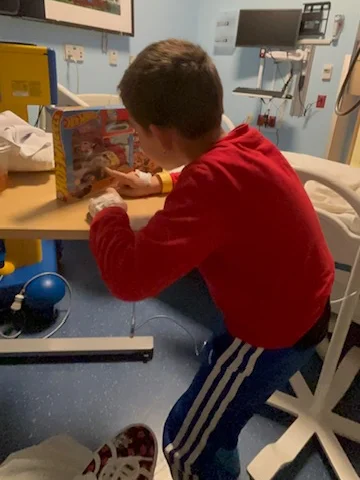
Last Christmas Eve, I was admitted to the hospital with one of my kids. I’m a single foster and adoptive mom of three, all with some combination of special needs, medical complexity, and behavioral challenges — and in that moment, I had no plan for what to do with my other child. I remember sitting with that particular kind of panic: not about the medical situation itself, which I knew how to handle, but about the sheer logistics of being needed in two places at once, on a night when almost everyone I could normally call was busy with their own family.
My village came through, and I mean that in the fullest sense of the word. People who had their own holiday plans rearranged them, with almost no notice, to help me get through the next 24 hours. I don’t think I’ll ever fully be over the gratitude I feel for that.
What I Wish I’d Known Before That Night
Here’s what stays with me most: it shouldn’t have taken a crisis for me to find out who was actually available. I had assumed, in the vague way most of us do, that if something happened, people would step up. They did — but I got lucky that the right people had the right night free. Luck isn’t a plan.
If I could go back, I’d have those conversations in October, not on December 24th. Not a general “let me know if you ever need anything,” but something more specific: would you be able to take an overnight call during the holidays if I needed it? Naming it ahead of time, while nothing is on fire, takes the guesswork out of the moment when something actually is.
My Other Kids Mattered Too, Even That Night
Part of what made that night so hard wasn’t just the medical crisis — it was the awareness that my other child’s holiday had just been upended too, through absolutely no fault of their own. Kids in caregiving families end up absorbing a lot of disruption they never signed up for, and it’s easy, in the scramble of an emergency, to let their experience of the night get lost entirely.
I’ve learned that even a small gesture — a phone call at the usual bedtime, a promise that some piece of the day still belongs to them — matters more than trying to explain or apologize for the whole situation. And afterward, saying it plainly helps more than I expected it to: none of this was their fault, and none of it was their sibling’s fault either.
Grieving the Holiday I Didn’t Get
I don’t think I let myself grieve that night for a long time afterward. I was too busy being grateful — for the help, for the outcome, for my village — to notice that I’d also lost something real: an ordinary evening at home that I didn’t get to have. Gratitude and grief aren’t opposites, though. They can sit in the same chest at the same time. Missing that evening was a real loss, not a smaller one just because the reason was medical instead of chosen.
We ended up celebrating a delayed version of that Christmas about a week later. It wasn’t a replacement, exactly — more like a second chance to have the parts of the day that got interrupted. I don’t think there’s anything wrong with taking that chance when you can.
Learning to Say Yes
The part I keep having to relearn, even now, is how hard it still is for me to accept help — even after everything my village did for me that night. Medical parents get used to being the ones who handle it, who anticipate everything, who don’t want to be one more thing on someone else’s holiday. But caregiving alone isn’t sustainable, and pretending otherwise doesn’t protect anyone. It just isolates you right when you need people the most.
The people who rearranged their own holiday for me weren’t doing me a favor I now owe back. They were doing what a village is actually for. I’m learning, slowly, that saying “yes, please come” instead of “no, we’re fine” isn’t a failure of independence — it might be one of the most important skills a caregiver can build.
Diana Gelfand, LCSW, is a licensed therapist, single foster and adoptive mother of three children with medical complexity and behavioral challenges, and a specialist in caregiver burnout and anticipatory grief. If holiday caregiving stress is more than your family can carry alone, schedule a consultation to learn more about working together.
For a practical breakdown of how to prepare, read Supporting Your Family Through a Hospital Holiday: A Caregiver’s Guide.

Diana Gelfand, MSW, LCSW
Licensed Clinical Social Worker, foster and adoptive mom of three, Certified Grief Educator, and 2026 Angels in Adoption® honoree.
